
“Tangerine Road” by Ann Calandro
creative nonfiction
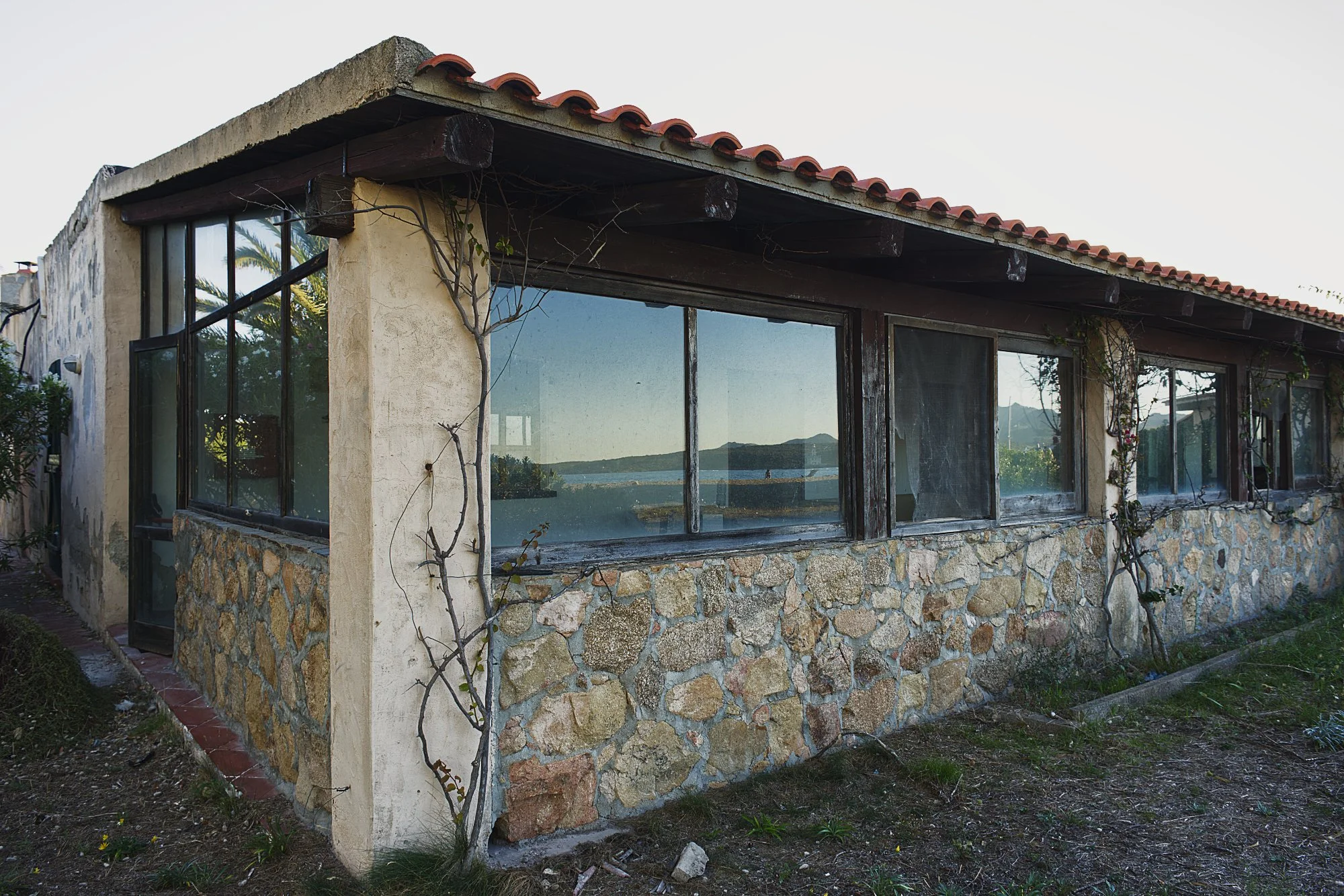
“Beach Hotel 1” by Eugene Datta
As I doze, my hands loosen on the coupons. My father keeps his apartment cold, but the car is warm. Sometimes I crack my window and let my fingers drift into the wind, enjoying the contrast between inside and out.
“Careful with those coupons, Lenny! What store has the best price on hamburger meat?”
I startle awake and shuffle through the coupons.
“The A & P. There are three coupons.”
“We’ll go there next for three packs, plus cornflakes to mix in with the patties.”
“Can we get hamburger buns instead of bread?”
“No, we’ll get bread. It’s half-price on Saturday evenings. It’s just like buns, only square instead of round."
I disagree in silence and look out at the holiday lights and decorations. We go grocery shopping every Saturday night. Per the divorce agreement, my father picks me up at my mother and stepfather’s apartment on Friday evenings at eight p.m. and brings me back on Sunday evenings at seven p.m. Every Sunday evening, I walk in with a ten-dollar check made out to my mother.
“Why can’t he just pay the child support in cash? Ask him why he can’t just pay in cash!” my mother yells.
The next week, when I ask my father why, he says, “This is legal tender,” stabbing his finger into his check. “They want cash because that’s easier for them, but this is legal tender. Tell them that!”
He keeps paying with a check, and they keep getting angry. I give the check to my mother every Sunday. When she’s done yelling about my father, she tells me to take my bath and go to bed.
I don’t like grocery shopping. I ask my father if we can go to a movie instead.
“There’s no other time to buy food,” he says. “I pick you up too late on Friday, so Friday is out. On Saturday, sometimes I have to work, and you like to watch cartoons, right? The grocery stores are closed on Sunday. When else are we going to buy food?”
“We can eat Sunday dinner with Roy and Ida,” I suggest.
“No, let’s give that idea a rest,” my father says. “Tomorrow we’ll make hamburger patties with the meat and cornflakes.” He sounds sad. We have knocked on Roy and Ida’s door on many Sundays. At some point during every visit, my father announces that my mother has been stolen by my father’s best friend. Even at eight, I understand that our neighbors’ initial impulse to invite a divorced father and his son for Sunday dinner can wear thin. Besides, my father never brings anything with him but me. I know we are supposed to bring a gift. I like Roy and Ida. I would bring them a gift if I could. Their apartment is warm, and they are kind. Ida always heaps seconds and even thirds on my plate while tousling my hair. One Sunday she made a pork roast that melted in my mouth. Once my father made something he called a pork steak, but it was so tough that we couldn’t eat it without choking. After dessert, which Ida bakes, Roy pulls a nickel from his ear, smiles, and gives it to me. I buy a candy bar on the way to school Monday.
I know my mother wasn’t stolen. She just left one day when I was five. I was in kindergarten, and my father was at work. He feeds punch cards into a large machine at the government building. He says the machine is huge and makes a grinding noise when it takes in and spits out the cards. My mother left a note on the kitchen table. My father read it out loud.
“What kind of man doesn’t let his wife buy potatoes when they’re not on sale? You have a county job. You can afford potatoes. You’re just too cheap to live with.” She left a potato on top of the note.
On Saturdays I’m not allowed to leave the apartment if my father is working. Except for Roy and Ida and an old man upstairs, there is just a lady across the hall who sobs and wails. I never see her, but she scares me. I eat dry cereal while I watch Bugs Bunny jump around on the screen. I don’t like the powdered milk my father mixes up. Soon after my mother left, I mixed cereal with orange soda because a cowboy in a commercial told me he eats that for breakfast and I should too. It tasted terrible. I retched up my one swallow and flushed the rest of the soda-soaked cereal down the toilet.
Some Saturdays my father doesn’t work, so we go to the laundromat to wash his work clothes and to the drugstore for the newspapers, and sometimes he buys me a candy bar. If it isn’t raining, maybe we go to the playground and play catch before we go home. We eat bologna sandwiches on last week’s bread, drink orange soda, and cut coupons from the newspapers.
Tonight the hamburger meat is very cheap, and my father is happy. He buys three big packages, handing the cashier a coupon for each one and calling her “madame,” plus a jumbo box of cornflakes and several loaves of discounted bread. The total is seven dollars and three cents. Sometimes a cashier will say to forget about the pennies, but this cashier does not, so my father grumbles and adds them.
“Old battle-axe,” he mutters as we leave. We carry the bags to the car and get in. I put the coupons on my lap.
“What’s the best deal on eggs?”
I look through the coupons again.
“National.”
At the traffic light, he turns right instead of going straight.
“We’re going to make a little stop first,” he tells me. “I need to ask Ginny something. You remember Ginny, right? She lives with her father again.”
I remember Ginny. She lived with her father near where I lived with my parents when they were married. Ginny’s father is missing two fingers on his left hand. He once showed me his hand and told me I should be careful if I ever work with machinery. I told him I would be careful even though I don’t want to work with machinery. When I was six, my father and I lived with Ginny and her father for a few months, and there was also a baby named Timmy in a white crib, looking up at me. He cried a lot, and I would wiggle my fingers at him and make funny faces to try to make him smile. Then one day my father and I moved to the apartment he lives in now, and he mails an envelope to Ginny every week.
“Yeah,” I said. “She’s nice. She has a baby. Timmy.”
“That child was not conceived in love! You were conceived in love! That’s why that child doesn’t visit us on weekends!” I don’t understand what my father means. He always says things I don’t understand, like “You are living under the sword of Damocles” when I have a test at school, and “Now you are feeling the pain of life” when I fall and scrape my knee. I used to ask my mother and stepfather why my father says things I can’t understand, but they hate him and can’t or don’t want to explain. They’re busy with their new baby. Her name is Amber.
“She’s your half-sister,” they say. “Isn’t she pretty?” I sleep in her room during the week. She doesn’t cry as much as Timmy did, but sometimes I still can’t sleep.
“I want you to ask Ginny something for me,” my father says. “It’s almost Christmas, so maybe she’s in a happy mood and she’ll say yes.”
“What do I ask?”
“Ask her if I can stop paying child support. She’s living with her father, and he gets disability, so she’s OK for money.”
“I don’t want to.”
“Come on, just ask. She might say yes because it’s near the holidays. She might be in a holiday mood.”
I don’t think Ginny is going to say yes.
My father pulls up to Ginny’s building. I remember that she and her father live on the top floor. The lights are on in their window, so they're home. I get out of the car and walk up the three flights.
Ginny opens the door after my first knock.
“Oh, it’s you,” she says. She doesn’t look happy or unhappy to see me. I smell something good in the apartment, like oranges. I have never tasted oranges, but I know what they smell like. My father says fruit is too expensive. My mother and stepfather drink orange powder mixed with water. They say they like it better than orange juice.
“What do you want, Lenny?”
Behind Ginny I see the living room, with its shaggy rugs and dark-green sofa and lamps on either side. It looks warm. There are yellow curtains on the windows. I think the curtains were blue when I lived there. The lamps are turned on, and a small boy leans into Ginny’s father on the sofa, looking at me. Ginny’s father puts his arm around the boy and pulls him closer. There are toys and books next to the boy.
I look back at Ginny.
“My father wants me to ask you something. He wants to know if he can stop paying you the ten dollars each week for Timmy.”
Ginny takes a breath, exhales, and shakes her head. She crosses her arms and taps her foot. She counts to ten slowly, like Mrs. Dora, my teacher.
“Tell your father no. Tell him he can’t stop sending us the money. Tell him he has to send it until Timmy is sixteen, and tell him he’s going to send it. That’s the law. That’s what the judge said. Every week like clockwork, on time. Tell your father that, please.” She takes another deep breath. She’s still tapping her foot.
“Kid!” calls Ginny’s father. “Look sharp!”
I look up, and he tosses me one small orange ball, then another. I catch them both. They look and smell like oranges, but they’re smaller, with baggy skin.
“They’re tangerines,” he says. “They taste like oranges, but they’re easier to peel. For the holidays.”
“Thank you,” I say. I put the tangerines in my jacket pockets, one on each side, cradled in each hand. I stand at the door a little longer, looking in. There’s something in that room that I want, but I don’t know what it is or what it’s called.
“Ok,” I say. “I’ll tell my father what you said.”
Ginny pats my shoulder.
“You’re a good kid, honey. I remember you were nice to Timmy when he was a baby. This isn’t your fault. I hope you have a happy holiday.”
“Ok,” I say again. “I hope you have a happy holiday, too. Thank you for the tangerines.” Mrs. Dora says if someone wishes you something nice, you wish it back to them. If someone gives you something nice, you thank them.
I walk down to the second floor and sit on the landing. I remove the tangerine from my left pocket. It’s easy to peel. I eat each piece slowly, savoring the smell and the sweet juice in my mouth. I put the peel in my empty left pocket and go outside.
My father is strumming his fingers on the wheel.
“What took you so long?” he asks. “What did she say? Did she say yes?”
“She said no.”
“Oh well,” he says, and he starts up the car. “It was worth a try. I guess she and that father of hers aren’t feeling any holiday goodwill. Let’s head over to National for eggs. Hold onto those coupons, son!”
Once he pulls away, I crack my window and flutter my fingers in the air. Slowly, without my father noticing, I push the coupons through the window and watch them all float free, some in one direction, some in another. My father is talking about the price of eggs and doesn’t notice. I return my hands to my pockets and, with my right hand, I rotate the second tangerine. I pretend it’s a whole world. It’s a different world from ours, like the room I just saw, and I’m inside it.
*
Ann Calandro is a writer, artist, and classical piano student. Her writing has appeared in Lit Camp, The Fabulist, The Plentitudes, and other literary journals. Serving House Books published her short story collection, Lost in Words, in February 2025 and will publish her poetry collection in 2026 and a collection of her collages in 2027. Her artwork has appeared in literary journals, been included in the 2023 New Jersey Arts Annual, and exhibited at Phillips Mill, the Monmouth Museum, the Biggs Museum of American Arts, and many galleries. Shanti Arts Press published three children’s books she wrote and illustrated. See artwork at ann-calandro.pixels.com
Eugene Datta is the author of two books: Water & Wave (Redhawk Publications) and The Color of Noon (Serving House Books). His work has appeared in numerous print and online journals. A Pushcart Prize and Touchstone Award nominee, he lives in Aachen, Germany.